
Introducing Signet Film: brand films you see before you pay
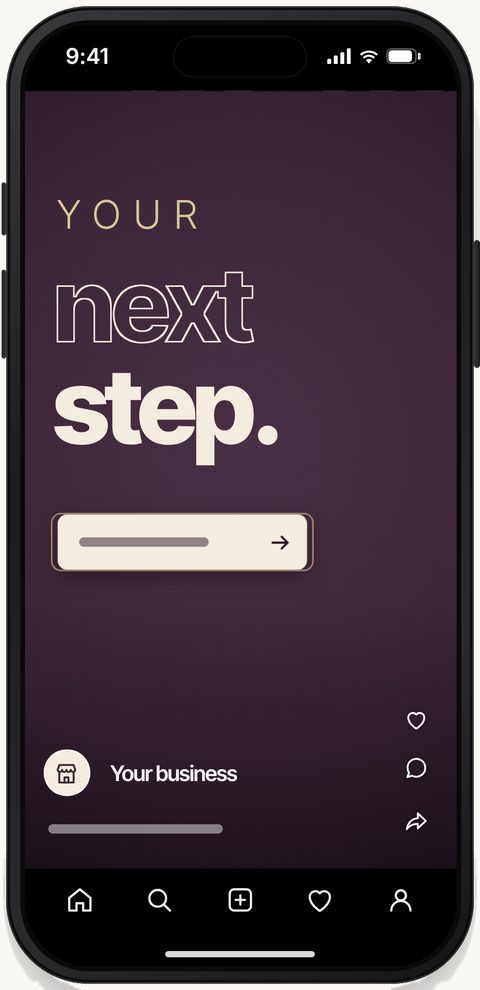
Signet Film makes short brand films for any business, built from scratch in your look and voice and ready to post on social media. You see a watermarked preview of your film first, and you pay only if you love it.
That’s the whole idea. The rest of this post explains how it works, why video matters for a business right now, and why every film we make follows the same four beats: the hook, the services, the proof and the ask.
How Signet Film works
Most businesses know they should be posting video. What usually stops them is cost and time. Agencies charge thousands and take weeks, and doing it yourself means learning new tools and finding hours you don’t have.
We built Signet Film to take both problems away. It works in three steps.
- Tell us where to find you. Request a preview and point us to your business online. There’s no brief to write and no meetings to sit through.
- We make your preview. We study your business and its socials, take your colours, type, voice and services, and shape a film around one idea from your world. It’s built from scratch, not a template with your logo dropped on top. Your watermarked preview arrives by email.
- Pay only if you love it. If the film is right for you, you buy the finished version and it’s yours to post. If it isn’t, you owe nothing.
Simple one-off pricing. No subscription.
Preview first means you’re judging a real film about your business, not a showreel of someone else’s. We’d rather you decide with your own eyes than on our promises.
Why video matters for businesses now
People would rather watch than read, and the research keeps pointing the same way.
Wyzowl’s State of Video Marketing 2026 report, based on a survey of marketers and consumers in late 2025, found that 91% of businesses now use video as a marketing tool, and 93% of video marketers call it an important part of their strategy. On the buying side, 85% of people say they have been convinced to buy by watching a video, and 63% say a short video is how they would most like to learn about a product.
85% of people say they have been convinced to buy by watching a video.
The same report shows why so many businesses still hold back. Among marketers who don’t use video, “too expensive” ties with “not needed” as the most common reason, and lack of time comes close behind. Cost and time are exactly the two problems a preview-first, one-off film is designed to solve.
Quality matters too. In the same survey, 89% of consumers say video quality affects how much they trust a brand. A film that looks like you made it says something about the care you put into your work.
The platforms are leaning the same way. This October, LinkedIn brought back its mobile Video tab, a full-screen feed of short vertical videos, and gave it the place in the app’s navigation where Notifications used to sit, as DUO’s Justin DeMarchi reported on 30 October. LinkedIn’s Director of Product, Lakshman Somasundaram, had earlier said video watch time on the platform grew 36% over a year. And on Microsoft’s January 2026 earnings call, Satya Nadella said paid video ads on LinkedIn grew 30% year on year. For any business that sells to other businesses, that’s a clear signal about where attention is heading.
Why every film follows hook, services, proof and ask
Every Signet Film follows the same shape. To be straight with you, the four-beat order is our approach, not a law of advertising. But each beat rests on evidence about what makes short video work.
Our approach
Four beats, one film
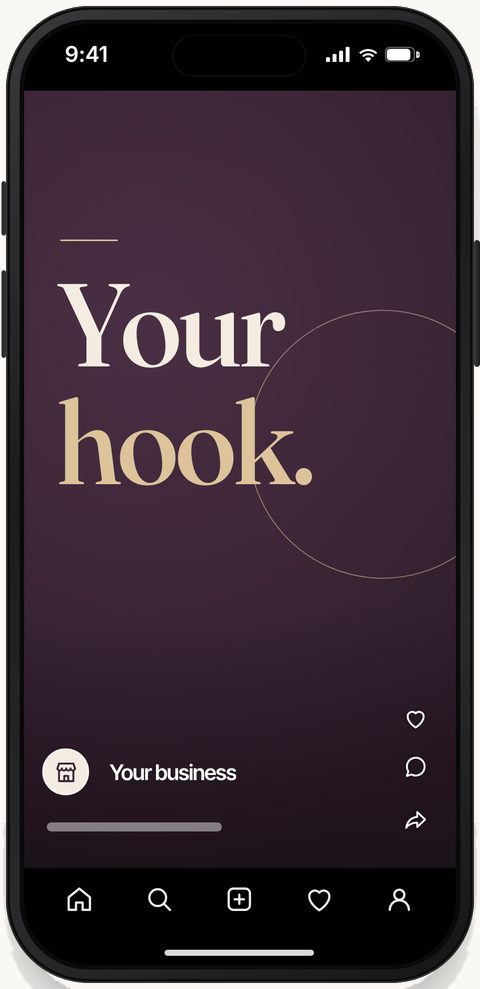
1
The hook
Who you are and what you do, straight away.
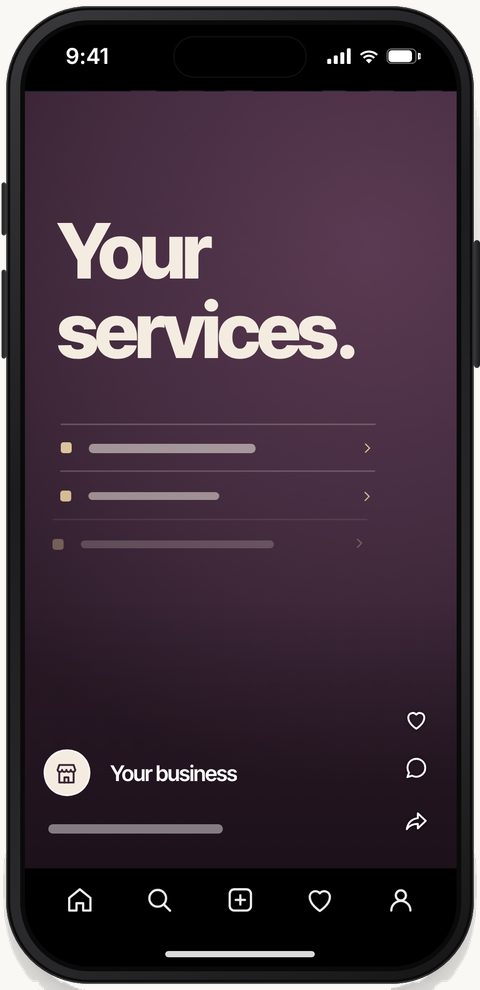
2
The services
What people buy from you, and what they get.
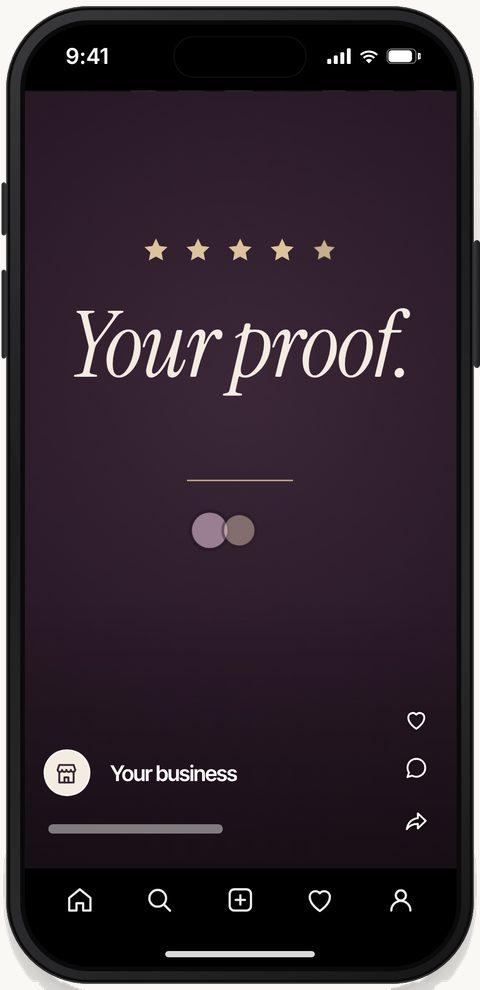
3
The proof
Real evidence that earns trust.
4
The ask
One clear next step.
The hook
The opening has to say who you are and what you do, straight away. The very first frame doubles as the thumbnail, and it has to make sense with the sound off.
The evidence here is strong. Google’s guidance on effective video ads, its ABCD framework, tells advertisers to “get to the heart of the story faster” and to introduce the brand or product from the start. Google cites joint research with Kantar from 2021 that found as much as a 30% lift in short-term sales likelihood for ads that follow these principles. Meta’s creative guidance from 2019 said much the same: surface key messages and branded visuals in the first three seconds, and make video that works with sound on and sound off.
The services
Next, the film shows what you actually sell: what people buy from you, and what they get. One idea per beat, kept simple, so a viewer understands your offer before the scroll moves on.
Google’s guidance backs the principle: focus the message, avoid doing too much, and keep the language simple. How much of the film to give the services is our own judgement. But a film that leaves people unsure what you do hasn’t done its job.
The proof
Then the film earns trust with real evidence: years in business, credentials, a genuine rating or a review quoted word for word. We never invent facts, and we show quality rather than claim it.
Reviews carry real weight. BrightLocal’s Local Consumer Review Survey 2026, a survey of 1,002 US adults published in February, found that 97% of consumers read reviews for local businesses, 85% are more likely to use a business after reading positive reviews, and 49% trust reviews as much as personal recommendations. Putting that proof inside the film means viewers see it at the moment they’re deciding.
97% of consumers read reviews for local businesses.
The ask
Finally, one clear next step. Not three options, just one, matched to how your customers actually get in touch.
Google’s guidance is direct here too: include a call to action, and say what you’d like viewers to do. Asking for one thing rather than several is our own rule, and we keep it because a single ask is easier to act on.
See yours
Whether you run an accountancy practice, a garden-room company or a wine shop, the approach is the same: your look, your voice, your services and your proof, in a film that’s ready for the feed.
The best way to judge it is to see a film made for your own business. Tell us where to find you, and we’ll send your preview by email.
Questions
Do I have to pay for the preview?
No. You see a watermarked preview of your film first, and you pay only if you love it and want the finished version.
Is there a subscription?
No. Simple one-off pricing. No subscription.
Do I need to film anything or write a brief?
No. There's no filming, no brief and no meetings. Tell us where to find your business and we do the rest.
Where are the films meant to be posted?
On social media: LinkedIn, Instagram, X and Stories, made for the phone, where your customers scroll.
Sources
- Wyzowl, Video Marketing Statistics 2026 (State of Video Marketing 2026), 2026 report, survey fieldwork late 2025; read 31 October 2026
- DUO, LinkedIn's Video tab is a bet on vertical video. Should you? (Justin DeMarchi), 30 October 2026
- Google Ads Help, About the ABCDs of effective video ads (citing Google/Kantar, The Short & the Long of ABCDs Effectiveness, April 2021), current page, read 31 October 2026
- Meta for Business, How to get the most out of video, 27 June 2019
- BrightLocal, Local Consumer Review Survey 2026 (Rosie Murphy), 11 February 2026